
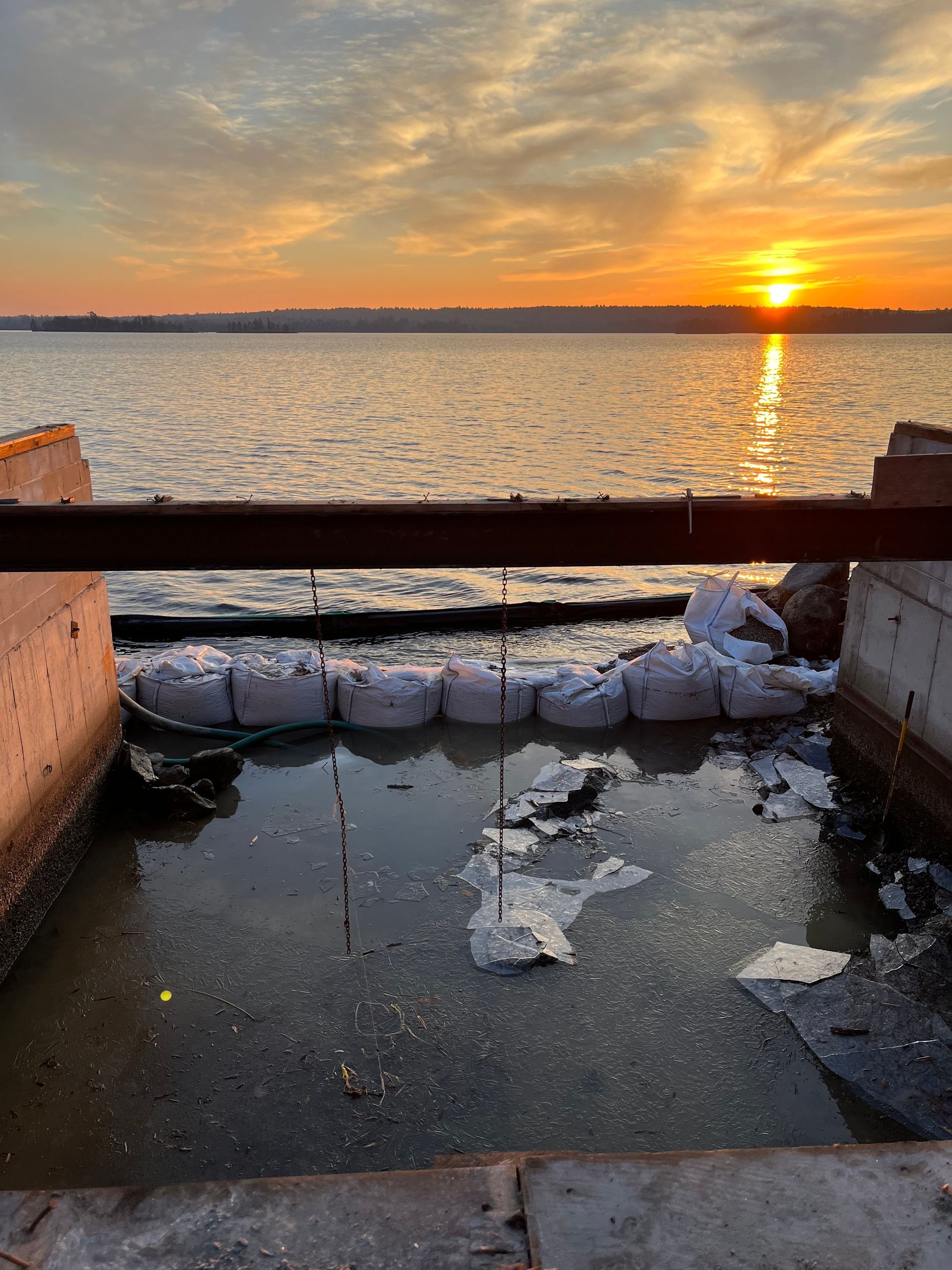
Stabilizing Banks Before They Wash Away
Shoreline protection in Belgrade for waterfront properties losing ground to erosion and wave action
Jason Stevens Excavation LLC installs shoreline protection when your waterfront property is losing soil to waves, ice, or seasonal water level changes. You might see tree roots exposed along the bank, chunks of lawn breaking off after spring runoff, or a beach area that's narrowing each year as the shore erodes. Shoreline protection stabilizes the bank using rock and natural materials that absorb wave energy and hold soil in place. The work involves placing large stone along the water's edge, grading the bank to a stable angle, and sometimes adding layers of smaller rock or fabric to prevent soil from washing out between the stones.
Installation starts with assessing the slope and the height of the bank, then excavating or regrading the face to an angle that won't collapse under its own weight. Large angular rock, often called riprap, is placed along the toe of the slope where wave action is strongest, then worked up the bank in layers. Filter fabric or graded stone is sometimes laid behind the rock to keep fine soil from migrating through the gaps. In Belgrade, properties on lakes face shifting water levels and ice heave in winter, so the rock is sized and placed to handle those forces without shifting out of position.
If your shoreline is eroding or you're losing usable land along the water, contact Jason Stevens Excavation LLC to evaluate the site and discuss protection options that fit your property.
What Keeps a Shoreline From Eroding Further
You'll see the excavator place rock starting at the waterline, building up the slope in a way that interlocks and resists movement. Stone size typically ranges from twelve inches to several feet in diameter, depending on wave energy and the height of the bank. The rock is set at an angle that deflects wave force instead of taking the full impact head-on, and gaps between stones are filled with smaller material to keep the structure tight. Grading behind the rock creates a transition zone where soil meets stone without a sharp drop that could lead to slumping.
When the work is complete, you'll notice the bank holds its shape through storms and water level changes, with no soil washing into the water and no further loss of yard space. Jason Stevens Excavation LLC leaves the shoreline stabilized and ready to support vegetation or remain as a rock face, depending on your preference. The area above the rock line can be seeded or left natural, and the waterfront stays intact without ongoing erosion undermining the bank.
Shoreline protection doesn't include building docks, creating beaches, or planting vegetation. The work focuses on stabilizing the bank and preventing further erosion. Permits may be required depending on the extent of work and proximity to regulated water bodies, and that process happens before installation begins.
Questions About Protecting a Waterfront Property
Shoreline protection involves material selection, grading, and long-term performance in changing conditions. These answers address the factors that affect how the work is done and how the bank holds up over time.
What type of rock is used for shoreline protection?
Large angular stone, often called riprap, is used because it interlocks and resists movement better than rounded stone, and it's sized to handle the wave energy and slope of your specific site.
How far up the bank does protection need to go?
The rock typically extends from below the waterline to above the high-water mark, covering the zone where wave action and ice movement cause the most erosion.
Why does the slope angle matter?
A gradual slope spreads wave energy across a larger surface and reduces the force hitting any one point, which keeps the rock in place and prevents the bank from slumping behind the protection.
When is the best time to install shoreline protection in Belgrade?
Late summer and fall are often ideal because water levels are lower, giving better access to the toe of the slope and allowing the rock to be placed and graded without working underwater.
What will the shoreline look like after installation?
You'll see a stable rock face that follows the contour of the bank, with the top edge blending into the existing grade and the waterline protected from further erosion.
If your waterfront is losing ground or you need to stabilize a shoreline before more soil washes away, reach out to Jason Stevens Excavation LLC to assess the bank and go over protection methods that work for your property in Belgrade.