
Water Redirected Before It Causes Damage
Drainage in Belgrade for properties with standing water, washouts, or basement seepage
Jason Stevens Excavation LLC installs drainage systems in Belgrade, Maine, where clay soils, shallow bedrock, and seasonal runoff create conditions that trap water on the surface or push it toward foundations. You need this service when storm water pools in your yard after rain, runoff carves channels through your driveway, or moisture seeps into your basement because the ground slopes toward the house instead of away. The work begins with walking the property to identify where water collects, which direction it flows, and what features—such as hardpan layers, compacted fill, or low-lying areas—prevent it from draining naturally.
Drainage solutions include French drains that intercept subsurface water and carry it to daylight or a dry well, surface swales that redirect runoff across the yard, catch basins that collect water from paved areas, and curtain drains that cut off water moving downslope toward structures. In central Maine, that often means cutting through frost-affected topsoil, placing perforated pipe in washed stone, and ensuring outlets remain clear during spring melt and heavy autumn rains. The design depends on your lot layout, existing grades, and where water can be discharged without affecting neighboring properties or wetlands.
Contact Jason Stevens Excavation LLC for a drainage assessment and customized solutions in Belgrade.
How Drainage Systems Move Water Off Your Property
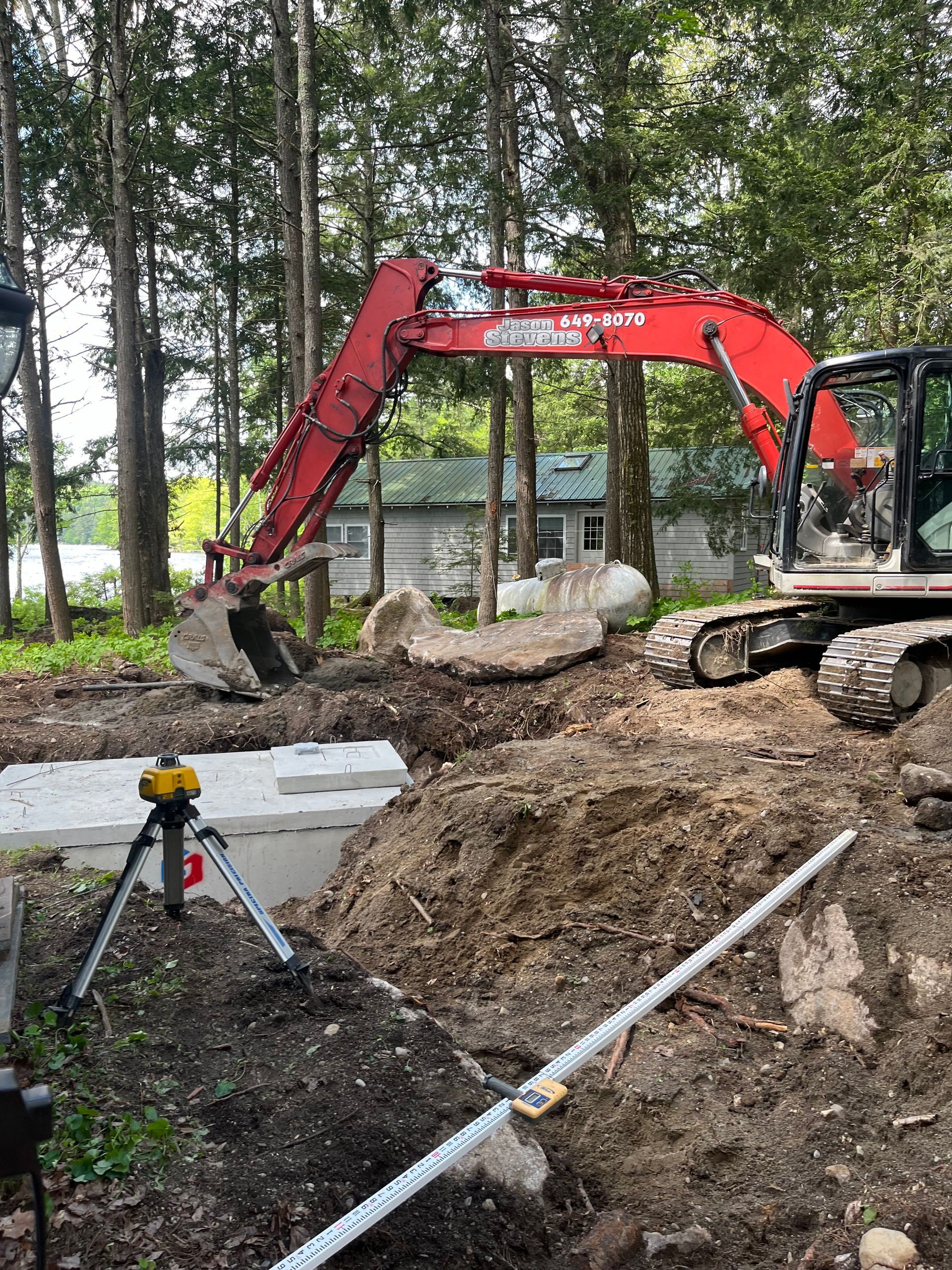
The crew uses a mini excavator or trencher to dig narrow trenches along the planned route, a laser level or transit to check slope, and hand tools to set pipe at a consistent grade. You will see perforated drain pipe bedded in clean stone, wrapped in filter fabric to prevent silt infiltration, and backfilled with gravel before finish soil is replaced. Surface swales are shaped with the excavator bucket, graded to a gentle slope that moves water without eroding, and sometimes lined with stone or sod to stabilize the channel.
After the drainage system is installed, water flows into the pipe or swale instead of pooling on the surface, moves downslope through the gravel bedding, and exits at a lower point on the property or into a designed outlet. Jason Stevens Excavation LLC sets the system to handle typical storm events based on soil infiltration rates and lot topography, leaving your yard drier after rain, your foundation protected from hydrostatic pressure, and your driveway free from washouts that require annual regrading. The difference shows in how quickly puddles disappear, how little erosion occurs along slopes, and how much less water enters your basement during wet seasons.
Drainage work does not include interior waterproofing or sump pump installation, though exterior systems often reduce the volume of water reaching foundation walls. The timeline depends on trench length, soil conditions, and whether ledge or tree roots complicate excavation. Some properties need multiple drainage components working together—such as a curtain drain upslope combined with a swale along the driveway—and those projects require more design coordination and material.
Questions About Managing Water on Your Property
Homeowners in Belgrade dealing with wet yards and runoff issues often ask about system types, maintenance, and how drainage integrates with existing site features.
What is the difference between a French drain and a swale?
A French drain is a buried perforated pipe that collects subsurface water, while a swale is a shallow surface channel that redirects runoff across the ground.
How deep does a drainage trench need to be?
Trenches are typically dug twelve to eighteen inches deep for residential systems, though depth varies based on frost line, pipe slope, and the elevation of the water source and outlet.
When should you install drainage on a new construction site?
Drainage is ideally installed after rough grading is complete but before final landscaping, so the system integrates with finish grades and does not get damaged by later site work.
Why does drainage pipe clog over time?
Pipe clogs when silt or organic material enters through gaps in the filter fabric, when the stone bedding becomes compacted, or when roots infiltrate perforations in search of moisture.
What site conditions in Belgrade affect drainage design?
Clay soils that drain slowly, shallow ledge that limits trench depth, and seasonal water tables that rise during spring thaw all influence system type, placement, and outlet location.
Jason Stevens Excavation LLC evaluates your property's water flow, soil conditions, and outlet options to design a drainage system that keeps your land dry and protects your investment—reach out to discuss your site and schedule an assessment.