Holding Ground Where the Land Shifts
Retaining wall installation in Belgrade for properties dealing with slope erosion and grade separation
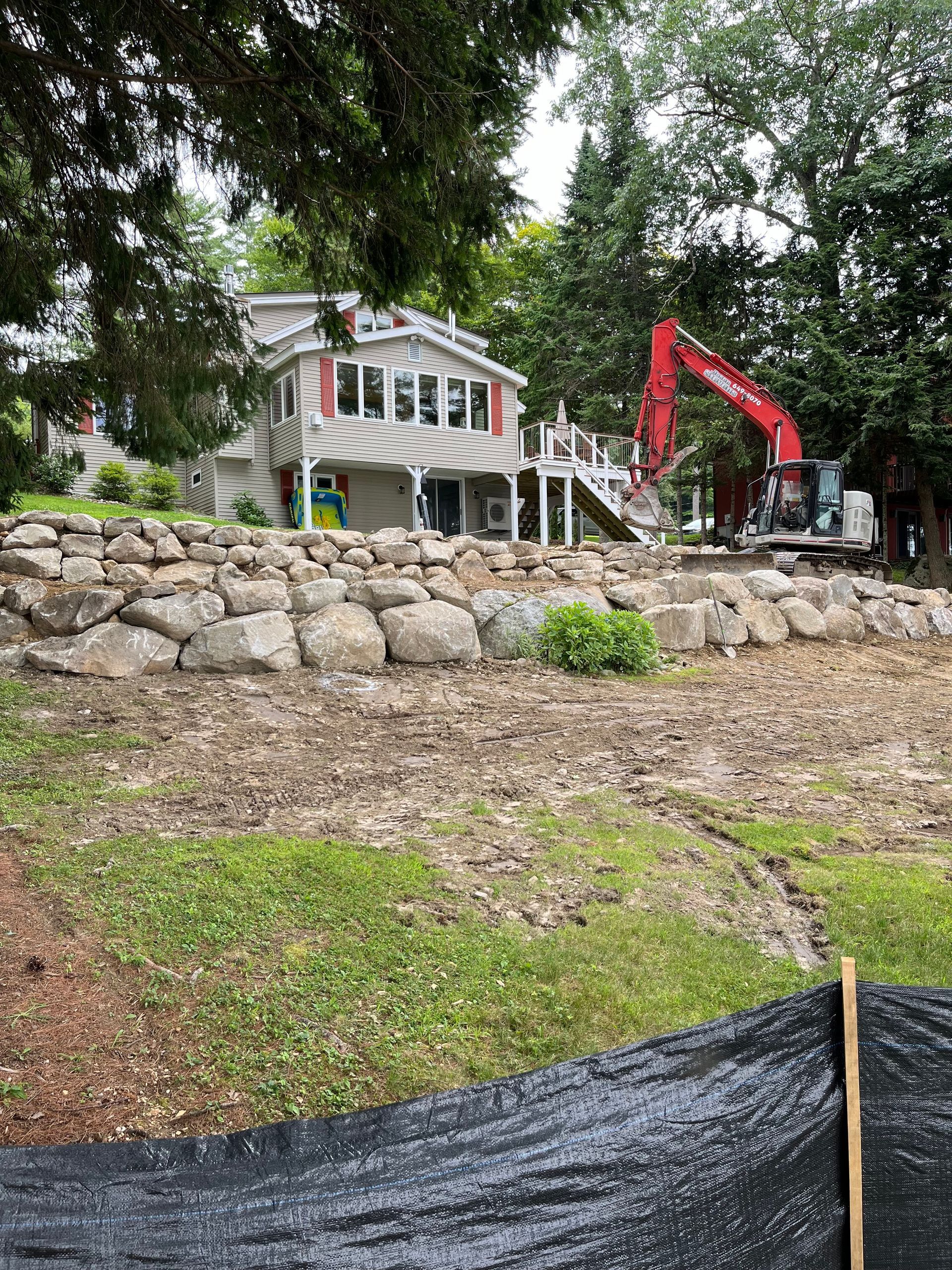
Jason Stevens Excavation LLC builds retaining walls and rock walls when your property has elevation changes that lead to erosion, unstable soil, or unusable yard space. You might see soil sliding after heavy rain, a driveway edge crumbling into the slope below, or a lakefront bank losing ground each spring. Retaining walls hold back soil, redirect water pressure, and create level areas where the natural grade won't support them. The work involves excavating behind the wall line, setting a stable base, and stacking stone or blocks in a way that handles both the weight of the soil and the freeze-thaw cycles common in Maine.
Installation starts with digging below the frost line to prevent heaving, then laying crushed stone for drainage and stability. Walls get built with material suited to the load and the look you want—natural fieldstone for a traditional appearance, or larger angular rock for steeper grades and higher loads. Backfill includes gravel layers that let water escape instead of building pressure behind the wall. In Belgrade, properties near water or on slopes with clay soils often need extra attention to drainage to keep the wall from shifting over time.
If your land is losing soil or you need a grade change that won't erode, contact Jason Stevens Excavation LLC to assess the site and talk through material options and layout.
How a Wall Manages Load and Water
You'll see the wall anchored into stable ground with a footing trench that extends below frost depth, usually three to four feet in central Maine. Each course of stone or block gets set with a slight backward lean to counter soil pressure, and voids between stones are filled with smaller rock to lock the structure together. Perforated drain pipe runs along the back of the wall, wrapped in filter fabric to keep silt out, then covered with washed stone that channels water away from the face.
Once complete, you'll notice the slope stays in place through rain and snowmelt, with no soil washing onto driveways or pooling at the base. Jason Stevens Excavation LLC finishes the top course level and backfills with material that compacts without settling unevenly. The area behind the wall becomes usable space, whether for planting, parking, or extending a yard that was previously too steep to maintain.
Retaining wall work doesn't include landscaping, topsoil placement, or hardscaping like patios. It focuses on structural stability and drainage. If your wall needs to meet specific engineering standards due to height or load, that design work happens separately before construction begins.
Common Questions About Retaining Wall Projects
Retaining walls involve material choices, site prep, and long-term performance. These answers cover what affects how the wall is built and how it holds up in Belgrade's climate.
What determines the type of material used?
The height of the wall, the soil type, and whether you want a natural or uniform look all influence whether fieldstone, larger rock, or modular blocks make the most sense for your site.
How deep does the base need to go?
The footing trench typically extends below the frost line, around three to four feet in central Maine, to prevent the wall from heaving during freeze-thaw cycles.
Why is drainage important behind the wall?
Without drainage, water pressure builds up as soil saturates, which can push the wall forward or cause settling and cracking over time.
When is a retaining wall necessary instead of regrading?
You'll need a wall when the slope is too steep to hold soil on its own, when space is limited, or when you need to create a level area without losing yard space to a long, gradual grade.
What will the finished wall look like?
You'll see a stable, level structure that holds the slope, with the face set back slightly and the top course aligned to match the grade you're creating.
If you're dealing with erosion or need to create usable space on a sloped property, reach out to Jason Stevens Excavation LLC to evaluate the site and go over retaining wall options that fit your land and budget.