
Ground Work That Meets Code and Drains Right
Septic Install in Belgrade for replacement systems and new construction on rural lots
Jason Stevens Excavation LLC handles septic system installation in Belgrade, Maine, where soil percolation rates, water table depth, and setback requirements shape every layout. You need this service when you are building a new home without municipal sewer access, replacing a failed system that no longer absorbs effluent, or upgrading to meet current code after a property transfer or addition. The process starts with reviewing the site evaluation and septic design prepared by a licensed site evaluator, then coordinating excavation, tank placement, and leach field construction to match the approved plan and local health officer requirements.
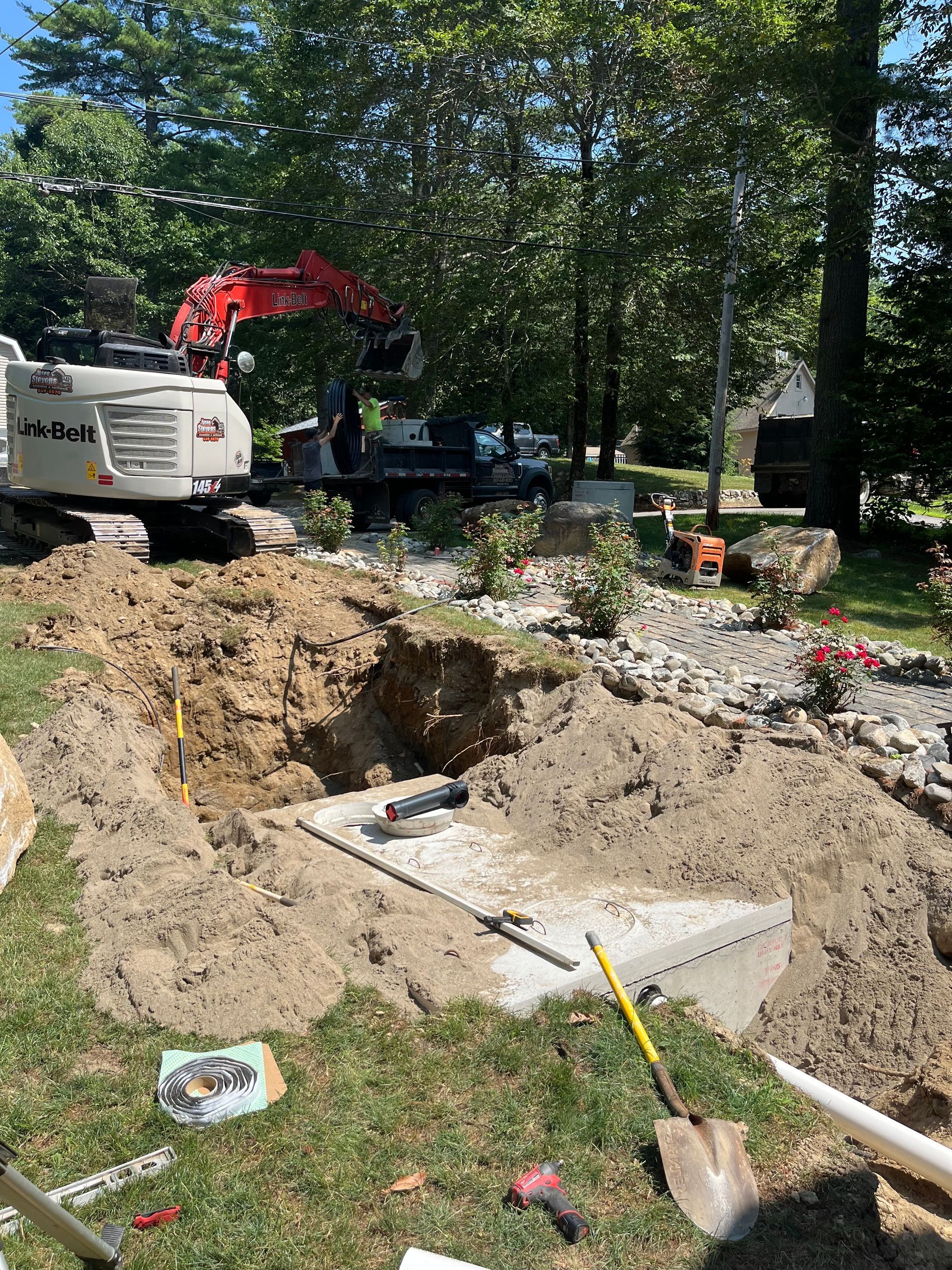
Installation includes digging the tank pit to the specified depth and dimensions, setting the concrete septic tank level on a gravel or crushed stone base, excavating trenches for the distribution lines, laying perforated pipe within the leach field, and backfilling with washed stone and clean fill. In central Maine, that often means working around shallow ledge, managing seasonal groundwater that rises during spring thaw, and ensuring the system sits far enough from wells, property lines, and surface water to meet state and local setback rules.
Call Jason Stevens Excavation LLC to schedule a septic installation consultation and review your site conditions in Belgrade.
How the System Goes In From Tank to Field
The crew uses an excavator to dig the tank hole and leach field trenches, a skid steer to place and grade stone, and hand tools to set the distribution pipes at the correct slope. You will see the tank lowered into place with straps, inlet and outlet baffles checked for alignment, and riser lids installed flush with finish grade or slightly above to prevent surface water infiltration. The leach field trenches are filled with clean stone, the perforated pipe is laid level or to a slight grade, and the stone is covered with geotextile fabric before backfill to prevent soil from clogging the drainage layer.
Once the installation is complete, the system drains wastewater from your home into the septic tank, where solids settle and liquids flow into the leach field for soil absorption. Jason Stevens Excavation LLC coordinates with the local plumbing inspector and health officer to schedule required inspections before backfilling, ensuring the system is installed to code and positioned as drawn on the approved plan. The difference shows in how consistently the system drains, how long the leach field continues to absorb effluent without surfacing, and how few callbacks or compliance issues arise after final inspection.
Septic installation does not include the design or site evaluation, which must be completed by a licensed site evaluator before work begins. The timeline depends on excavation conditions, inspector availability, and whether ledge or high groundwater requires system modifications. Some sites need a mound system or pump chamber if soil depth or percolation rates do not support a standard gravity system, and those configurations add material and labor to the installation.
Questions Homeowners Ask About Septic Systems
Property owners in Belgrade often want to know about permitting, site limitations, and how the installation process unfolds.
What information do you need before starting a septic installation?
The crew works from the approved septic design and site plan, which specify tank size, leach field layout, and setback distances based on soil tests and local code.
How deep does the septic tank need to be buried?
Tank depth depends on the inlet pipe elevation from the house and the slope required for gravity flow, typically placing the top of the tank within two to three feet of finish grade.
When does the health officer inspect the system?
Inspections occur after the tank is set and before the leach field is backfilled, so the inspector can verify pipe placement, stone depth, and setback compliance.
Why does a septic system fail over time?
Systems fail when the leach field becomes saturated due to high water tables, compacted soil, or excessive water use, or when solids migrate into the distribution pipes because the tank has not been pumped regularly.
What site conditions affect septic installation in Belgrade?
Shallow ledge, high seasonal groundwater, steep slopes, and proximity to wells or wetlands all influence system type, placement, and the amount of excavation required.
Jason Stevens Excavation LLC works closely with homeowners, site evaluators, and inspectors throughout the installation process to ensure your septic system is built right and approved without delays—contact the team to discuss your project.