Controlled Earthwork That Fits Your Property
Excavating in Belgrade for properties with uneven ground, ledge, or space constraints
Jason Stevens Excavation LLC provides excavating services across residential and rural properties in Belgrade, Maine, where you deal with a landscape shaped by glacial till, bedrock outcrops, and seasonal frost. You call when a project requires moving earth with precision, whether you are preparing a building pad on sloped ground, installing underground utilities across rocky soil, or expanding usable space along a forested lot line. The work begins with an evaluation of what lies beneath the surface—soil type, drainage direction, and how close ledge sits to grade—so the equipment and approach match the conditions you are working with.
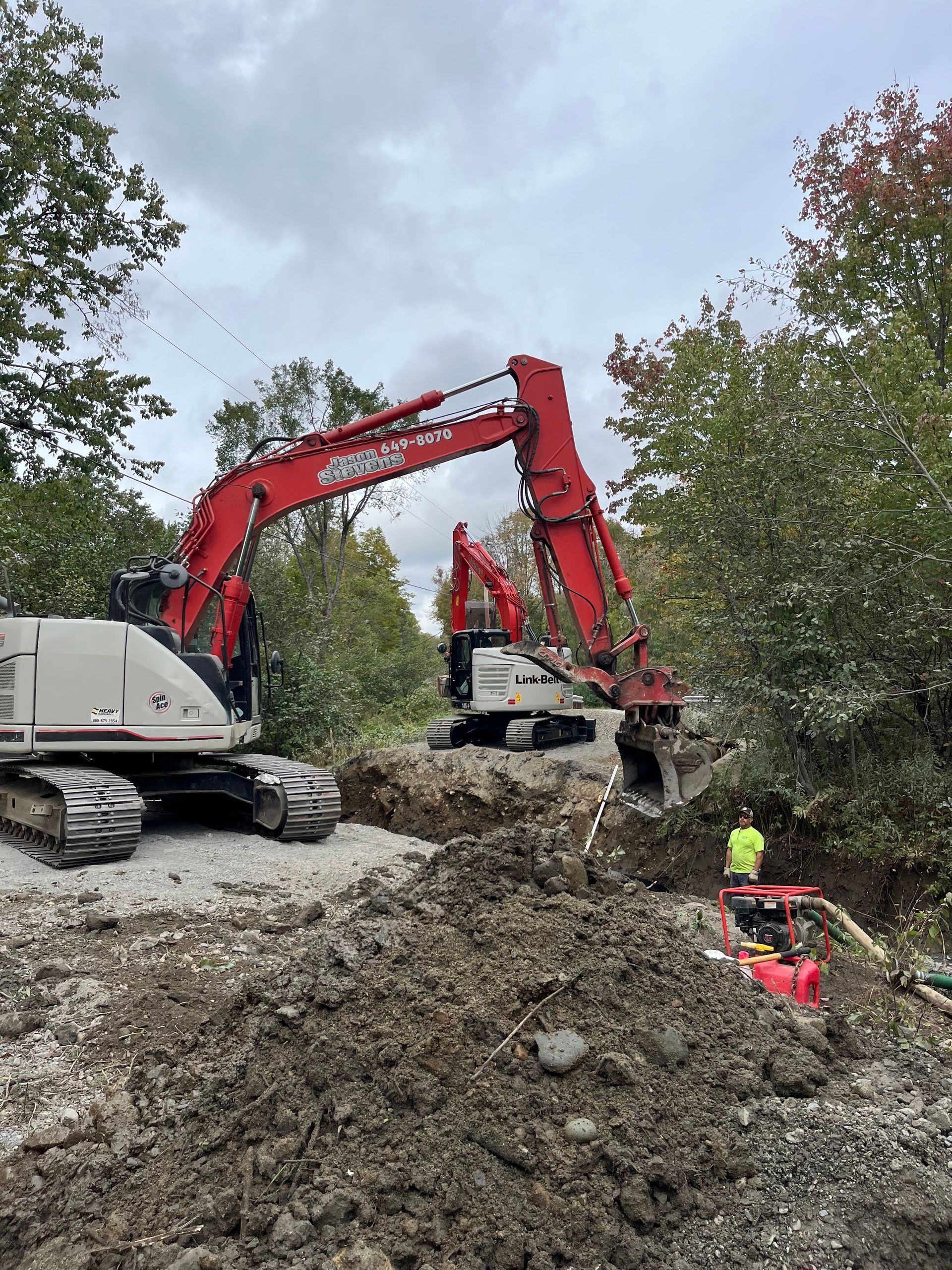
Excavating includes trenching for water and electrical lines, digging footings for foundations or outbuildings, grading pads for garages or additions, and removing material to reshape terrain. In central Maine, that often means cutting through layers of clay hardpan, breaking ledge when it blocks the dig path, and managing groundwater that surfaces during spring melt or after heavy rain. The operator adjusts bucket angle, dig depth, and material handling based on what the site reveals, keeping the work zone stable and avoiding unnecessary disturbance to adjacent areas.
Contact Jason Stevens Excavation LLC to schedule an on-site evaluation and discuss your excavation project in Belgrade.
What the Job Involves From Setup to Backfill
The crew uses excavators, skid steers, and grading equipment sized to the job, moving from rough excavation to fine grading as the project dictates. You will see soil separated by type—topsoil stockpiled for reuse, ledge fragments staged for disposal or fill, and subgrade compacted to support the next phase of construction. The operator works to grade, measuring depth and slope to meet specifications for drainage, foundation bearing, or utility installation.
After the excavation is complete, the ground sits level where it needs to be flat, sloped where water must run off, and clear of loose material that would settle unevenly under load. Jason Stevens Excavation LLC leaves the site ready for the next contractor or the next stage of your project, with access routes maintained and excess material removed or spread as agreed. The difference shows in how cleanly the foundation sits, how well storm water moves away from the structure, and how little rework the site requires before framing or paving begins.
Excavation does not include blasting, though the crew can work around shallow ledge or coordinate with a licensed blaster if bedrock runs deep. The timeline depends on soil conditions, equipment access, and whether the site requires dewatering or temporary shoring. Projects on wooded lots may require clearing before excavation starts, and wet sites may need a few dry days to stabilize before heavy equipment can operate safely.
Common Questions About Excavation Work
Homeowners and contractors in Belgrade often ask about timing, site conditions, and how the work coordinates with other trades.
What determines how deep you can dig on a sloped lot?
The excavator digs to the depth required by your foundation or utility plan, adjusting cut and fill to balance material and maintain stable side slopes without excessive shoring.
How do you handle ledge that appears during excavation?
Shallow ledge is broken with a hydraulic hammer attached to the excavator, while deeper or widespread bedrock may require a licensed blaster depending on project depth and proximity to structures.
When is the best time to excavate in central Maine?
Late spring through fall offers the most stable ground conditions, though winter excavation is possible on frozen sites where access and frost depth allow.
Why does the site need grading after excavation?
Grading directs water away from foundations and ensures the subgrade is compacted and level enough to support concrete, gravel, or pavement without settlement.
What happens to the soil removed during excavation?
Topsoil is typically stockpiled for reuse in final grading, while excess subsoil and ledge are hauled off-site or redistributed based on your project plan and local regulations.
Jason Stevens Excavation LLC works with homeowners, builders, and site planners throughout Belgrade and surrounding areas to coordinate excavation with permits, inspections, and construction schedules—reach out to discuss site conditions and project planning.