
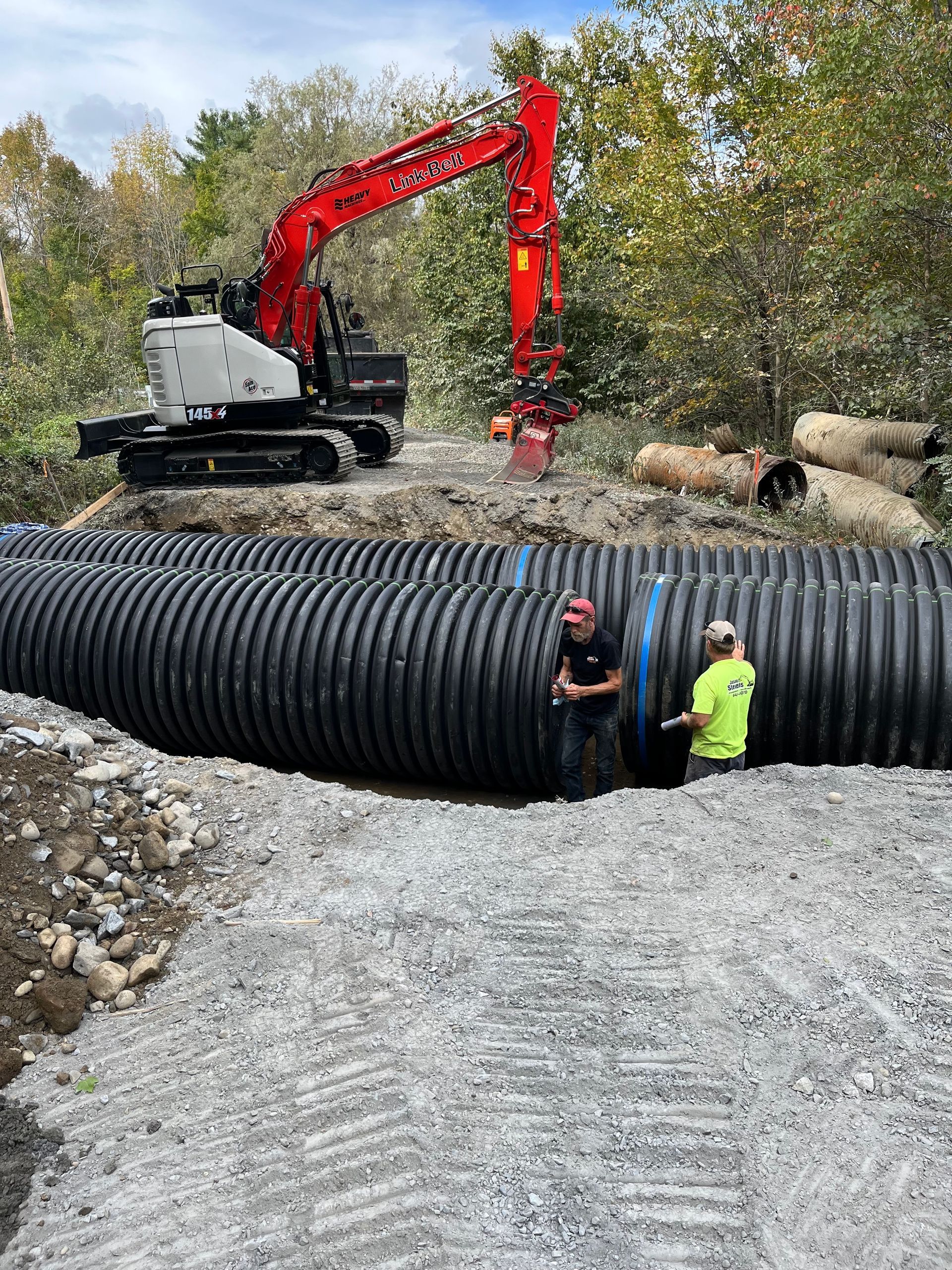
Keeping Water Moving Under the Drive
Culvert installation in Belgrade for properties where water flow threatens driveway stability and drainage
Jason Stevens Excavation LLC installs culverts when water needs to pass under a driveway, road, or access path without washing out the surface or eroding the base. You might see pooling water after rainstorms, a driveway edge crumbling where runoff crosses, or a dirt road rutting out every spring when snowmelt has nowhere to go. Culverts channel water through a pipe set below the driving surface, keeping the flow controlled and preventing the roadbed from becoming unstable. The work involves sizing the pipe based on the volume of water that moves through during peak flow, excavating a trench across the drive, and backfilling with material that supports the load above without settling unevenly.
Installation starts with digging out the existing surface and bedding the culvert on crushed stone so it doesn't shift or sink. The pipe is set at a grade that matches the natural drainage path, with the inlet and outlet positioned to handle water without creating erosion at either end. Backfill goes in around and over the pipe in compacted layers, then the driveway surface is rebuilt on top—gravel, pavement, or another material depending on what was there before. In Belgrade, culverts often need to handle spring melt and storm surges that move more water in a short period than during the rest of the year, so sizing tends to account for those peak conditions.
If your driveway is washing out or water isn't draining properly across your access road, contact Jason Stevens Excavation LLC to evaluate the flow and determine the right culvert size and placement.
How a Culvert Handles Load and Flow
You'll see the trench dug wide enough to place stone bedding under the pipe and allow room for compacted fill on the sides. The culvert itself is typically corrugated metal or plastic pipe, chosen based on diameter, expected load, and lifespan. Pipe diameter ranges from twelve inches for low-flow areas to thirty-six inches or larger where water volume is high or the drainage area is broad. The pipe is laid at a slight downward slope—usually one to two percent—so water moves through without ponding inside.
Once installed, you'll notice water flows underneath the driveway instead of over it, with no washouts, ruts, or standing water after storms. Jason Stevens Excavation LLC finishes the surface so it's level and stable, with the inlet and outlet areas protected by stone or riprap to prevent erosion where water enters and exits the pipe. The driveway holds up under vehicle traffic without sagging or settling over the culvert line.
Culvert installation doesn't include repaving asphalt surfaces or rebuilding extensive sections of roadbed beyond the immediate crossing area. The work focuses on the pipe, bedding, backfill, and immediate surface restoration. If permitting is required due to stream crossings or wetland proximity, that needs to be handled before installation begins.
Common Questions About Culvert Installation
Culvert work involves sizing, placement, and material choices that affect how well the system handles water over time. These answers cover the details that shape how the job is done in Belgrade.
What size culvert is needed?
Pipe diameter depends on the drainage area, the volume of water that flows during peak conditions, and whether the culvert is replacing an existing undersized pipe or being installed for the first time.
How deep does the culvert need to be set?
The pipe is typically buried at least twelve inches below the finished driveway surface to protect it from vehicle loads and prevent frost heaving in winter.
Why does the slope of the pipe matter?
A culvert set too flat won't drain fully and can clog with sediment, while one set too steep can cause erosion at the outlet or allow water to undercut the pipe over time.
When should a culvert be replaced instead of cleaned?
If the pipe is crushed, rusted through, or undersized for current water flow, replacement is necessary because cleaning won't restore function or prevent future failure.
What happens at the ends of the culvert?
The inlet and outlet are often lined with riprap or larger stone to prevent soil from washing away where water enters and exits, which keeps the pipe stable and reduces maintenance.
If you're dealing with drainage issues or need a culvert installed to protect your driveway, reach out to Jason Stevens Excavation LLC to assess the site and go over the specifics of your culvert project in Belgrade.